Showing posts with label Kentucky. Show all posts
Tuesday, March 20, 2018
Monday, March 19, 2018
Old Shawneetown, Illinois
The Shawneetown Bank State Historic Site is a historic bank
building is a Greek Revival structure build in 1839-1841 in Old Shawneetown, Illinois .
Old Shawneetown is on the banks of the Ohio River at the Illinois state line. As
of the 2010 census, the village had a population of 193. Shawneetown served as
an important United States
government administrative center for the Northwest
Territory . The village was devastated by the Ohio
River flood of 1937. The village's population was moved several
miles inland to New Shawneetown.
Sunday, March 18, 2018
Saturday, March 17, 2018
Garden of the Gods, Illinois
A 2 hour drive from our campground in Kentucky, Garden of the Gods in Illinois .
One of the most photographed locations in the state, Garden
of the Gods' scenic beauty is extraordinary. In the recreation area you can
hike, camp, nature watch or picnic.
The Observation Trail features unique sandstone rock
formations and panoramic views of the surrounding Garden of the Gods
Wilderness. Interpretive signs explain the geological history.
The 1/4-mile trail is made of natural sandstone and takes about an
hour to walk. It contains short, steep grades and steps; benches are
located along the trail and as a whole the trail is not tiring.
Caution should be used due to the high cliffs in the area.
Monday, February 5, 2018
following the quil trail
School House quilt block, Hanson, KY
Mosaic Star block, State Route 70, Central City, KY
Star of Bethlehem, Muhlenberg County Extension Office, KY
Following the Pennyrile Quilt Trail through Western Kentucky.
Thursday, February 1, 2018
stones and symbols
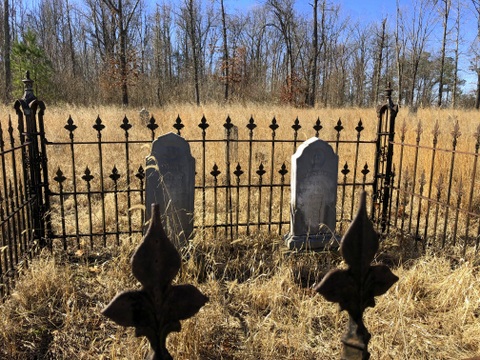
The cemetery in the ghost town of Paradise, Kentucky looks abandoned, the tall grasses hiding the smaller stones. These tall ones really stood out. The one above 1816-1839. At first we couldn't tell what the carving at the top was, but on the next one (below) we decided it was a tree, most likely a weeping willow.
Judith
wife of
Aaron Smith
1792-1860
Notice the intricate carving from over 150 years ago.
The weeping willow was a popular headstone carving in the 1800s.
Most assume the weeping willow is a symbol of grief based upon the name and down turned branches, and they are not wrong. But something I think fewer people may know is that the weeping willow is also a symbol of immortality. In Christianity specifically, the gospel teaches the tree "will flourish and remain whole, no matter how many branches are cut off." ~Southern Graves
The cemetery is on a hill, and at one time possibly overlooking the Green River in the valley below, but now the view is the TVA Paradise plant across the road.
We enjoy discovering the history of the areas where we travel. Sometimes the cemeteries are our favorite places to visit. I asked Buddy if maybe we should change our final resting plans to burial instead of cremation. He said why so our stones would be overgrown and forgotten like these?
Tuesday, January 30, 2018
we're going to need a bigger shovel
Coal is a natural resource in
The best way to get the coal out of the coal fields is to
strip the dirt off down to the seam of coal underneath - strip mining. Regular
sized dirt movers would do the job, but there was something bigger and better
on the way.
1962 saw the arrival of Peabody Coal Company's Bucyrus Erie 3850-B Power Shovel, dubbed "Big Hog,” and it was so big it had to be built on site, piece by piece. It was shipped by rail to the mining area. New roads had to be built and a special rail spur was made, along with special rail cars, to haul in some of the parts. 300 rail cars would bring in 5,000 parts and a 250-foot boom. The assembly took 11 months. Fully constructed, the machine stood 20 stories tall, weighed in at 20 million pounds, and cost some $7 million. Big Hog’s bucket could scoop up 115 cubic yards, more than a football field’s worth, or about 173 tons, uncovering coal seams in a strip mine pit where an army of other smaller shovels and trucks would load and haul the coal to TVA’s nearby
The Peabody Coal Company proceeded to strip over 50,000 acres of Muhlenberg County, Kentucky, leaving in their wake useless land full of pits and swamps. The land exists today in that same state, but has been turned into a wildlife refuge - 70,000 acres make up the Peabody WMA.
1820 First
commercial mine opened in Kentucky near
Paradise in Muhlenberg
County
1950 Coal companies
buy up farms for strip mining in Muhlenberg
County
1959 TVA (New Deal to help area) started
construction on the Paradise fossil fuel plant
and contracted with local coal companies for strip-mined coal to supply power
plants
1962 Peabody Coal
Company's Big shovel
1963 TVA Paradise
Coal plant began making electricity out of coal
1965 TVA black soot covers
the town of Paradise
and residents start moving out
1967 TVA bought out
the last of the buildings in Paradise and
bulldozed them down
Monday, January 29, 2018
Paradise, KY
When we first crossed the Muhlenberg
County line to our new Kentucky home away from home, I thought - Muhlenberg County , that sounds familiar, isn't that
in a song lyric? The line would pop into
my head from time to time and I finally had to look it up, yes of course I had
heard it before, sung by my favorite John Denver, in the song titled Paradise written by John Prine.
Listen to John Prine sing Paradise on this YouTube video, where you can see what happened to Paradise.
When I was a child my family would travel
Down to Western Kentucky where my parents were
born
And there's a backwards old town that's often remembered
So many times that my memories are worn.
Chorus:
And daddy won't you take me back to Muhlenberg County
Down by the Green River where Paradise lay
Well, I'm sorry my son, but you're too late in asking
Mister Peabody's coal train has hauled it away
Well, sometimes we'd travel right down the Green River
To the abandoned old prison down by Adrie Hill
Where the air smelled like snakes and we'd shoot with our pistols
But empty pop bottles was all we would kill.
Repeat Chorus
Then the coal company came with the world's largest shovel
And they tortured the timber and stripped all the land
Well, they dug for their coal till the land was forsaken
Then they wrote it all down as the progress of man.
Repeat Chorus
When I die let my ashes float down the Green River
Let my soul roll on up to the Rochester dam
I'll be halfway to Heaven with Paradise
waitin'
Just five miles away from wherever I am.
Repeat Chorus
The song chronicles the history of Paradise , Kentucky and the impact of strip mining for coal in the area. The song became an anthem in the early
70s for environmental control, being recorded by many other artists of the time, including the Everly Brothers (who are also from Muhlenberg County), John Denver, Dwight Yoakam, John Fogerty, and many more.
On a trip back home to Georgia ,
I dug through our old LPs and found the one I was looking for, with John Denver
singing Paradise .
I often refer to our job towns as Paradise, as in 'another
day in Paradise'…Paradise, LA, Paradise, OK… but this time there really is a
Paradise, Kentucky. Well there was. It is gone now. Nothing left but the graves, and the giant power plant, but that is another story.
Thursday, January 18, 2018
snowbird
after a week of snow on the ground, the only place not covered is where Buddy's truck was parked, so that is where the birds are looking for food
Sunday, January 14, 2018
Saturday, January 13, 2018
Subscribe to:
Posts (Atom)
-
"Susan Davis, owner of Olde America Antiques and American Quilt Blocks, has created a series of original quilt block designs to p...
-
it's a Southern thang a whole store of popcorn !?! it's a Yankee thang under the boardwalk... are we having fun yet? on the road a...
-
My two main projects for March were t-shirts and taxes, to be finished before I could go back on the road again... But wait, why is ...